
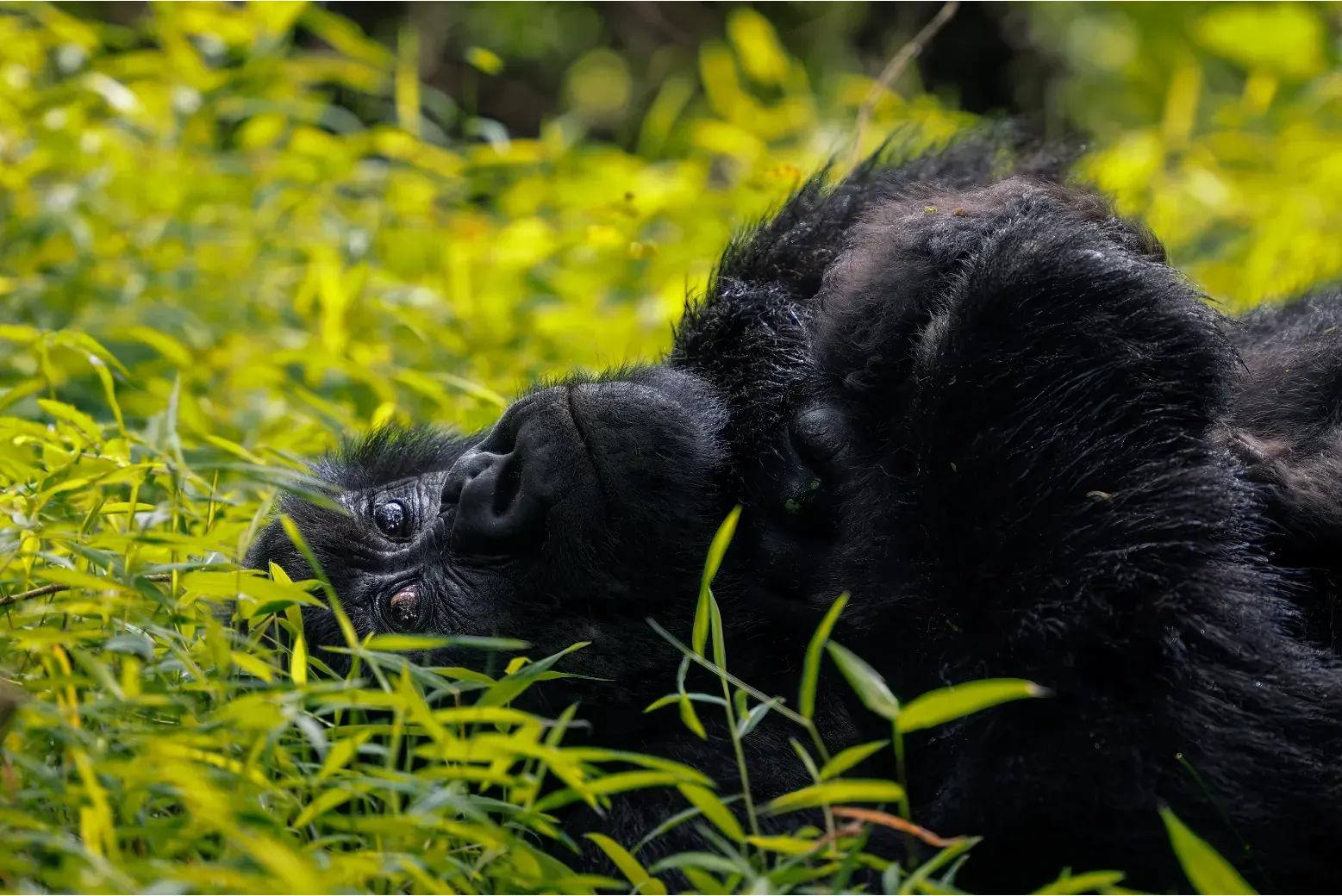
Uganda gorilla trekking
Two parks in the far south-west, both a day's travel from Nairobi. Denser forest than Rwanda, a permit that costs $700 less, and treks that are genuinely unpredictable. This is where we operate.
Where gorilla trekking happens in Uganda
Uganda has two gorilla parks, both in the south-western corner where the country meets Rwanda and DR Congo. Permits are issued by the Uganda Wildlife Authority and are valid for one park and one gorilla family on one named date.
Bwindi Impenetrable
A UNESCO World Heritage site of thick, steep montane rainforest. Most Uganda gorilla trekking happens here. Four trekking sectors — Buhoma, Ruhija, Rushaga and Nkuringo — each with its own park gate and its own lodges, so which sector you book determines where you sleep.
Mgahinga
Uganda's smallest national park, on the Virunga volcanoes. One habituated family, far fewer trekkers, and more open bamboo terrain than Bwindi. Golden monkey tracking is the natural second activity here.
Choosing between them
Bwindi for choice of dates and sectors, and for the classic dense-forest encounter. Mgahinga for quieter trails and easier ground, accepting that a single habituated family means fewer permits and less flexibility if your dates move.
Permits
A gorilla permit costs USD 800 per person for foreign non-residents in high season. In April, May and November — Uganda's wetter months — the Uganda Wildlife Authority applies a low-season rate of USD 600.
The permit covers one hour with a habituated gorilla family, park entry, ranger guides and an armed escort. It does not cover transport, accommodation, meals, porters or tips.
Two rules worth knowing before you plan around dates. Since March 2026 the seven-day reservation hold has been withdrawn, so permits are paid in full at the point of booking — there is no way to reserve a date provisionally. And the discounted low-season permits cannot be rescheduled, which is the trade-off for the $200 saving.
Foreign visitors book through a licensed Ugandan operator rather than directly with UWA. Our Uganda Tourism Board registration is at the foot of this page.
Full permit and trip cost breakdown
What a trekking day involves
You report to the park headquarters at around 07:00 for a ranger briefing. Trekkers are allocated to gorilla families according to the day's tracking reports and, where it matters, fitness — say so at the briefing if you have concerns and the rangers will place you on an easier family where they can.
Then you walk. Trackers have usually been out since first light and radio back the family's position, but gorillas move overnight and the walk can be anything from thirty minutes to eight hours. There is no way to know in advance, and anyone promising you a short trek is guessing.
When the family is found, the hour begins. Eight visitors maximum, seven metres distance, no flash. The gorillas themselves regularly ignore the seven-metre rule; you are expected to keep it anyway.
Porters are available at the trailhead and are worth hiring even if you are carrying almost nothing. They will haul you up the steep sections, and the work is one of the more direct ways trekking money reaches households around the park.
Add it to a Kenya safari
Nairobi to Entebbe is about an hour and twenty minutes, then roughly 45 minutes by charter to Kihihi or Kisoro. Bwindi sits inside a single travel day from the Mara.
How hard is it
Harder than Rwanda. Bwindi is steep, the ground is often wet and slippery, and there is no path in the usual sense — rangers cut through the undergrowth. Altitude sits above 2,000 metres, which most people notice on the climbs.
It is guided and paced, and a reasonably active person who walks regularly manages it. But it is a hike, not a stroll, and it is worth being honest with yourself about knees and ankles at the planning stage rather than at the trailhead. If mobility is a genuine concern, Rwanda's Volcanoes National Park is the better fit and we will say so.
The minimum age is fifteen in both countries and is enforced at the gate without exception.
More on trek difficulty and fitness
When to go
Trekking runs year-round and permits are issued in every season. The drier months — June to September, and December to February — make the walking easier underfoot and are correspondingly the busiest. Bwindi permits for those windows sell out six to ten months ahead.
April, May and November are wetter and the forest is harder work, but permits drop to $600 and availability is far better. If gorillas are the priority rather than the Kenyan safari half, the wet-season trip is genuinely worth considering.
Best time for Uganda gorilla trekking
Getting there
From Nairobi, fly to Entebbe. From Entebbe there are two options and the difference between them is significant:
- Charter flight — roughly 45 minutes in the air to Kihihi (for Buhoma and Ruhija) or Kisoro (for Rushaga, Nkuringo and Mgahinga), then a short road transfer. This is what most of our Kenya-combination itineraries use.
- Road — six to eight hours, usually broken with a night at Lake Mburo or Queen Elizabeth National Park. Slower, but it turns the transfer into part of the trip rather than a lost day.
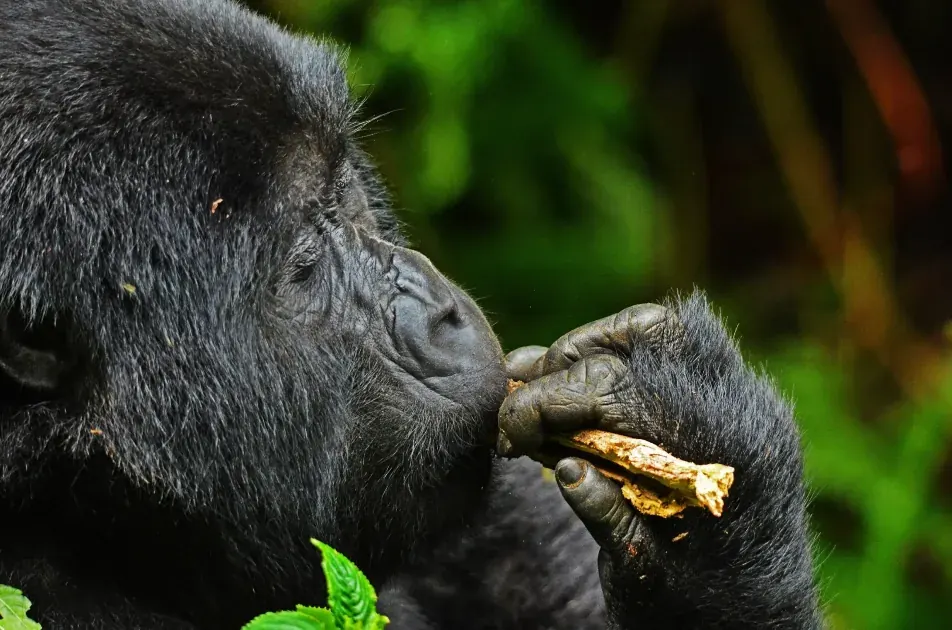
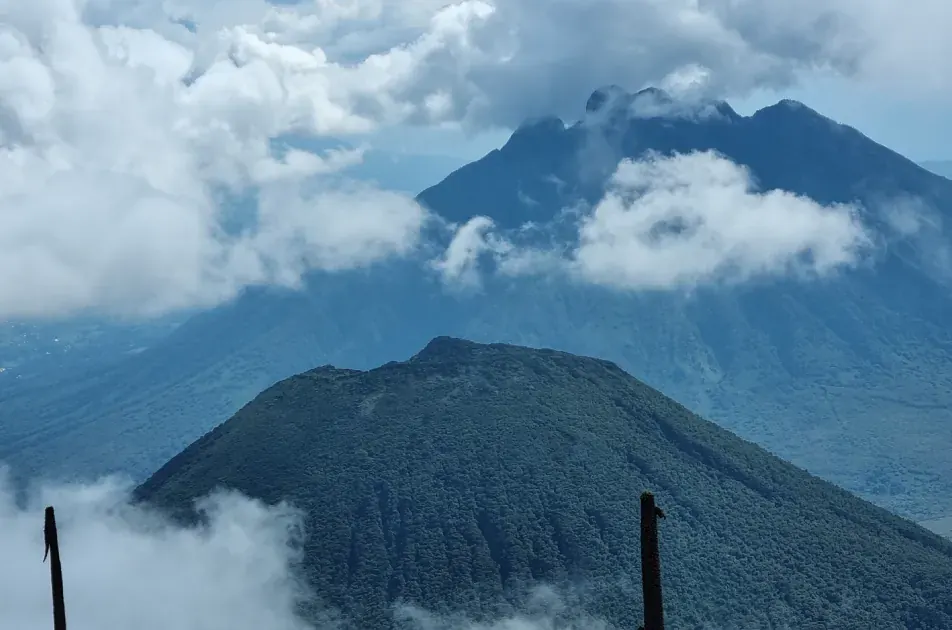
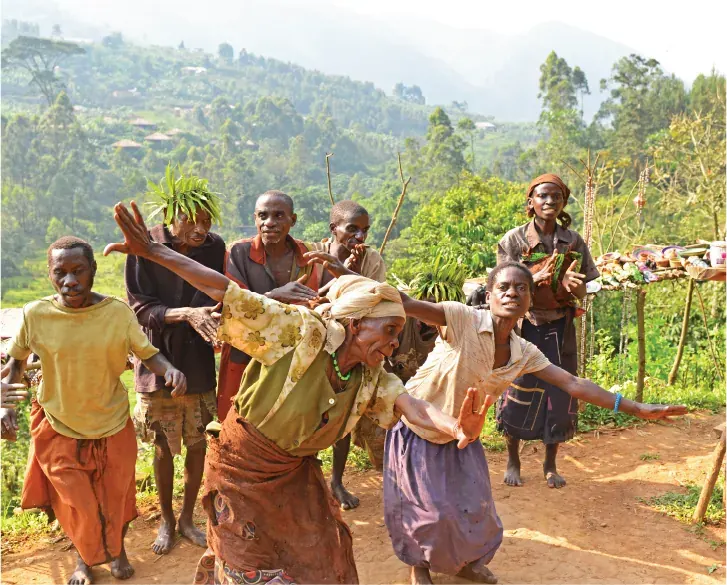
Beyond the trek
Uganda gives you more to build around a gorilla permit than Rwanda does. Chimpanzee tracking in Kibale Forest, the Kazinga Channel boat in Queen Elizabeth National Park, tree-climbing lions in Ishasha, Lake Bunyonyi for a recovery day after the trek, and the Nile at Jinja for rafting. The gorilla habituation experience — four hours with a family still being habituated, rather than one — is also only available in Uganda.
Common questions
How much is a Uganda gorilla permit?
USD 800 per person for foreign non-residents in high season, and USD 600 in April, May and November. It covers one hour with a habituated family, park entry and ranger guides. Discounted low-season permits cannot be rescheduled.
Bwindi or Mgahinga?
Bwindi for most people — more families, more permits, more date flexibility, and the dense-forest encounter Uganda is known for. Mgahinga for quieter trails and more open ground, accepting that a single habituated family means limited availability.
How far in advance should I book?
Six to ten months for July to September and December to February. Less pressure in April, May and November, which are also the discounted months.
Can I trek gorillas twice?
Yes, and it is a good use of a second day. Each trek needs its own permit and you will usually be allocated a different family. Travellers who do two treks almost always say the second was the better one, because the first is spent absorbing the shock of it.
What happens if we don't find the gorillas?
It is rare — trackers locate the families most days — but it does happen. UWA has a stated position on partial refunds and repeat treks in that situation. We confirm the current terms in writing with your booking rather than quoting a figure that may have changed.