
Best time for a Kenya safari
Kenya works year-round. What changes is the wildlife concentration, the crowds, the price of a park ticket, and whether the Mara tracks are passable.
The seasons
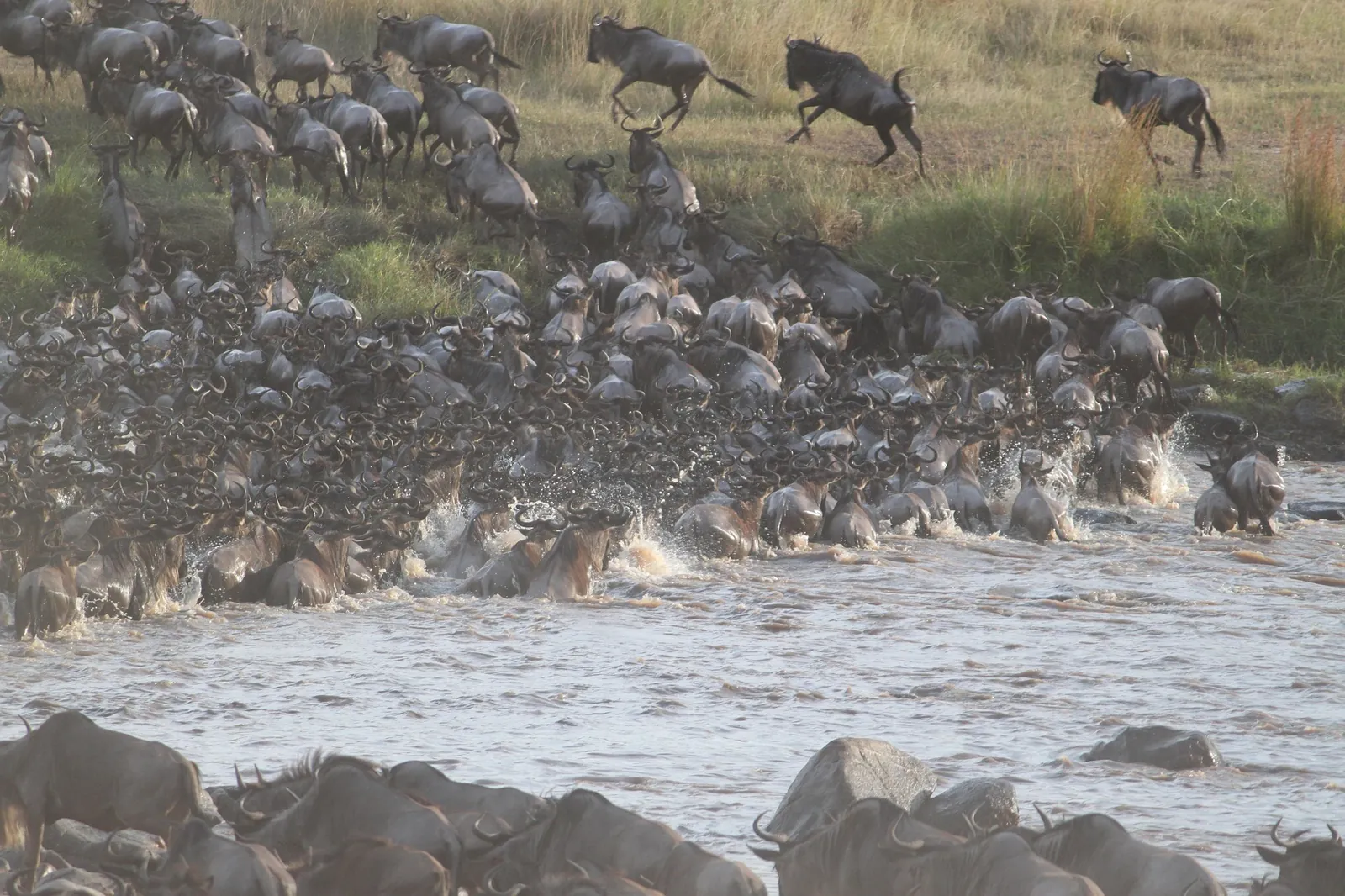
June to October — the long dry season, and the peak. Wildlife concentrates around water, vegetation thins so animals are easier to see, and the Great Migration river crossings fall in the Mara from roughly July onwards. Also the busiest and dearest period, and the point at which Mara park fees double.
November to December — short rains, usually brief afternoon storms rather than washouts. Landscapes green up, birdlife improves with migrant arrivals, and there are far fewer vehicles.
January to February — the short dry season. Excellent conditions, good wildlife viewing, and less crowded than the mid-year peak. An underrated window.
March to May — the long rains. Mara tracks become genuinely difficult, some camps close, and access can be unreliable. Rates are lowest and the landscapes are at their most beautiful. For a first Kenya safari, we would generally steer you away from April and May.
The park fee cliff
Worth planning around. Masai Mara entry is USD 100 per non-resident adult per day from January to June, and USD 200 from July to December. That doubling applies from 1 July, so a trip in late June and the same trip in early July differ by USD 100 per adult per day in park fees alone.
On four nights for two people, that is a USD 800 difference before anything else changes. Late June is one of the better-value windows in the Kenyan calendar for exactly this reason.
Migration timing
The herds move continuously between the Serengeti and the Mara. The Mara River crossings, which are the part people travel for, fall roughly between July and October.
They are not scheduled. Herds gather at the bank and may cross within the hour or wait for days. This is why four nights in the Mara beats three during migration season — you are buying the margin to wait.
Timing alongside gorilla trekking
July to September is the strongest combined window: Kenya's dry season and the river crossings, with drier trekking conditions in Bwindi. It is also when Uganda gorilla permits need booking six to ten months ahead and Mara park fees are at USD 200 per day.
Late December to February is the sensible alternative — good conditions on both legs, lower Mara fees, and less pressure on permits.
April and May are awkward: Kenya's long rains, but also two of the three months when Uganda discounts permits to USD 600. If gorillas are the priority, the trade may be worth it. If the Mara is why you are coming, it is not. November is the most balanced of the discounted months.
Common questions
What is the best month for a Kenya safari?
July to October for the Great Migration river crossings and peak wildlife viewing. January and February are an excellent, less crowded alternative. April and May are the long rains and best avoided for the Masai Mara.
When do Masai Mara park fees increase?
On 1 July. Non-resident adult entry rises from USD 100 to USD 200 per day and stays at that rate until the end of December.
Is it worth visiting Kenya outside migration season?
Yes. The Masai Mara's resident predator density is high year-round and there are far fewer vehicles at each sighting outside the July to October window.
Plan your Kenya and gorilla safari
Tell us roughly when you want to travel and how long you have. We will send a written itinerary and a quotation.