
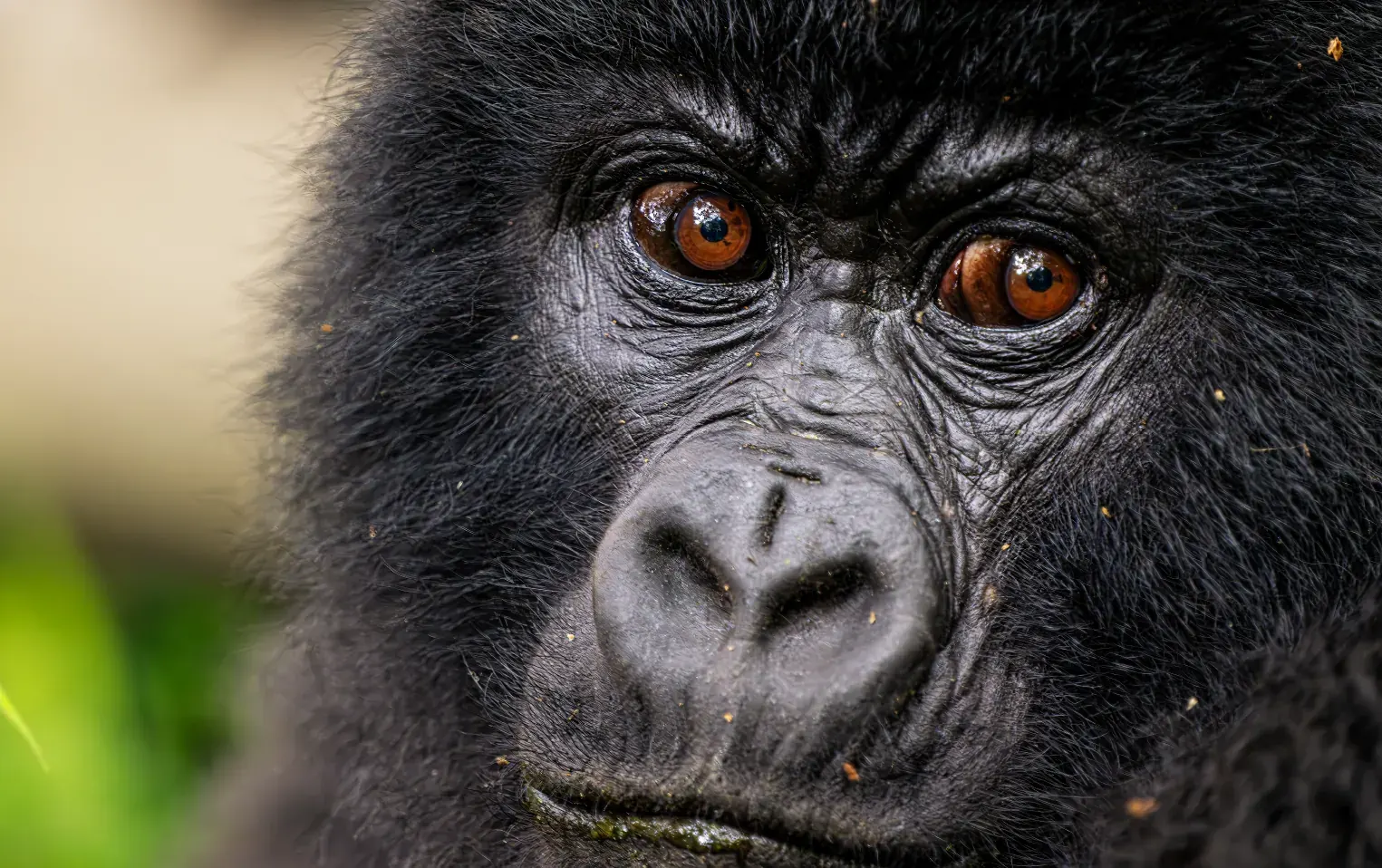
The gorilla habituation experience
Four hours with a gorilla family still being habituated, alongside the researchers doing the work. A different thing entirely from a standard trek, and available only in Uganda.
What habituation is
Before a gorilla family can be visited by tourists, it has to be habituated — gradually accustomed to human presence over a period of years by researchers and trackers who visit daily. Only once a family is comfortably habituated does it become available for standard trekking.
The habituation experience lets a small number of visitors join that process while it is still happening.
How it differs from a standard trek
Four hours rather than one. That is the headline, and it changes the character of the encounter completely. An hour is a snapshot. Four hours is enough time for the family to stop registering you and simply get on with the day.
Smaller groups. Fewer visitors than the eight permitted on a standard trek.
You are with researchers, not just guides. The day is structured around their work — identifying individuals, recording behaviour, monitoring health — and you are accompanying it rather than being toured.
The gorillas are less settled. A family in habituation is still wary. They move more, keep more distance, and the encounter is less composed than with a fully habituated group. Some visitors find this more interesting; some find it less satisfying.
Who it suits
Repeat visitors, serious wildlife photographers who want time rather than proximity, and anyone more interested in gorilla behaviour and conservation practice than in the single dramatic encounter. If this is your first and only gorilla experience, a standard trek is usually the better choice.
Where it happens
The Rushaga sector of Bwindi Impenetrable National Park, in the south. Kisoro airstrip is the nearest air access, roughly 45 minutes by charter from Entebbe.
Rwanda does not offer a habituation experience. If this is what you want, Uganda is the only option.
Cost
A habituation permit costs more than a standard gorilla permit, and the rate is under revision. Because the timing of that change is exactly the sort of detail that moves between announcement and implementation, we quote the rate applying to your specific dates rather than publishing a figure here that may be wrong by the time you read it.
Permits are strictly limited — considerably more so than standard trekking permits — and need booking further ahead.
What to expect physically
Harder than a standard trek. You are in the forest for most of a day, following a family that has not settled into a predictable range, over the same steep and tangled Bwindi terrain. Take everything on the standard packing list and add more water and more food.
The minimum age of fifteen applies as it does everywhere.
Plan your Kenya and gorilla safari
Tell us roughly when you want to travel and how long you have. We will send a written itinerary and a quotation.