
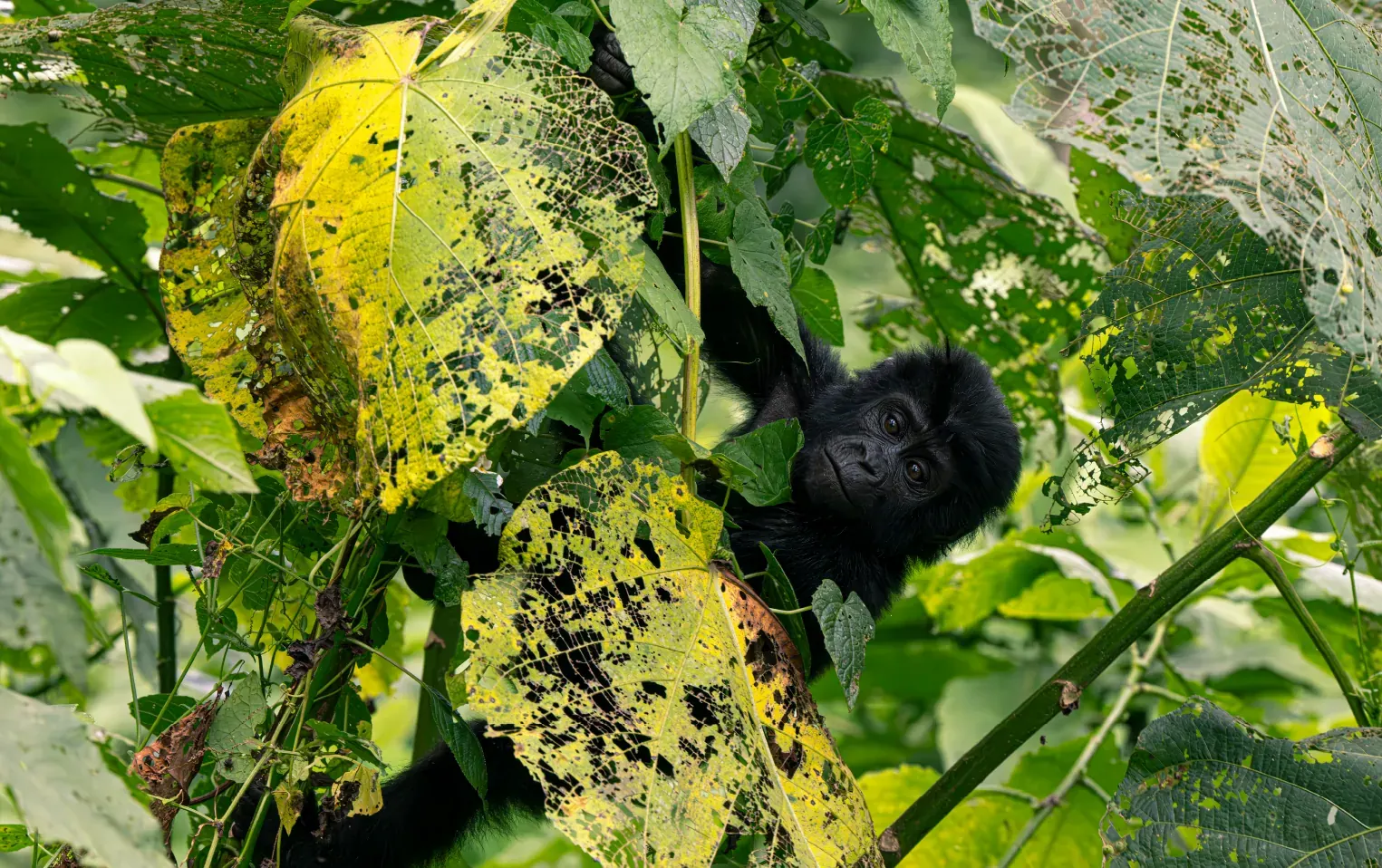
Best time for gorilla trekking in Uganda
Trekking runs year-round and permits are issued in every month. What changes is the walking underfoot, the crowding, and the price.
The two dry windows
June to September and December to February are the drier months. Forest paths are firmer, the walking is less punishing, and vehicle access to the sectors is more reliable.
These are also the busiest months. Bwindi permits for these windows sell out six to ten months ahead, and lodge rates are at their highest. If you want peak-season dates, the decision to book has to come early — particularly now that permits are paid in full at booking rather than held.
The wet months, and the discount
April, May and November are Uganda's wetter periods. The forest is harder work, the mud is real, and treks take longer.
They are also the three months in which the Uganda Wildlife Authority applies a low-season permit rate of USD 600 rather than USD 800. That is a USD 200 saving per person, USD 400 for a couple.
The catch worth knowing
Discounted low-season permits cannot be rescheduled. A standard permit can sometimes be moved with sufficient notice; a discounted one cannot. If your dates are at all uncertain, the saving is buying you a rigidity you may not want.
Does rain spoil the trek?
Not the encounter itself. Gorillas are in the forest in every season and trackers find them in every season. What rain changes is how long and how unpleasant the walk to them is, and how good your photographs are under a wet canopy.
Bwindi is rainforest. It rains in the dry season too. Waterproofs are not seasonal equipment here.
Timing alongside a Kenya safari
This is where the seasons stop lining up neatly, and it is worth understanding before you fix dates.
July to September is the best combined window by a clear margin. Kenya's dry season, the peak of the Great Migration river crossings in the Masai Mara, and drier trekking in Bwindi. It is also the most expensive and most heavily booked time in both countries.
Late December to February is the second dry window and works well for both halves with slightly less pressure on availability.
April and May are Kenya's long rains, when Masai Mara tracks get difficult — and they are two of the three discounted permit months in Uganda. So the cheap permit months are the awkward safari months. If the gorillas are the priority and the safari is the supporting act, that trade is worth taking. If the Mara is why you are coming, it is not.
November is the most balanced of the three discounted months and the one we most often suggest to travellers who want the saving without writing off the Kenyan half.
What to book, and when
- Peak dry season — commit six to ten months ahead. Permits first.
- Shoulder — three to six months is usually enough.
- Discounted months — availability is far better, but only book these if your dates are genuinely fixed, because the permits cannot be moved.
Common questions
What is the best month for gorilla trekking in Uganda?
June to September and December to February are driest and make the walking easier. July to September is the strongest window if you are also doing a Kenya safari, because it coincides with the Masai Mara river crossings.
Can you trek gorillas in the rainy season?
Yes. Permits are issued year-round and trackers locate the families in every season. Rain makes the walk longer and muddier rather than making the encounter less likely.
When are Uganda gorilla permits cheapest?
April, May and November, when the Uganda Wildlife Authority applies a USD 600 low-season rate rather than USD 800. These permits cannot be rescheduled.
Plan your Kenya and gorilla safari
Tell us roughly when you want to travel and how long you have. We will send a written itinerary and a quotation.