
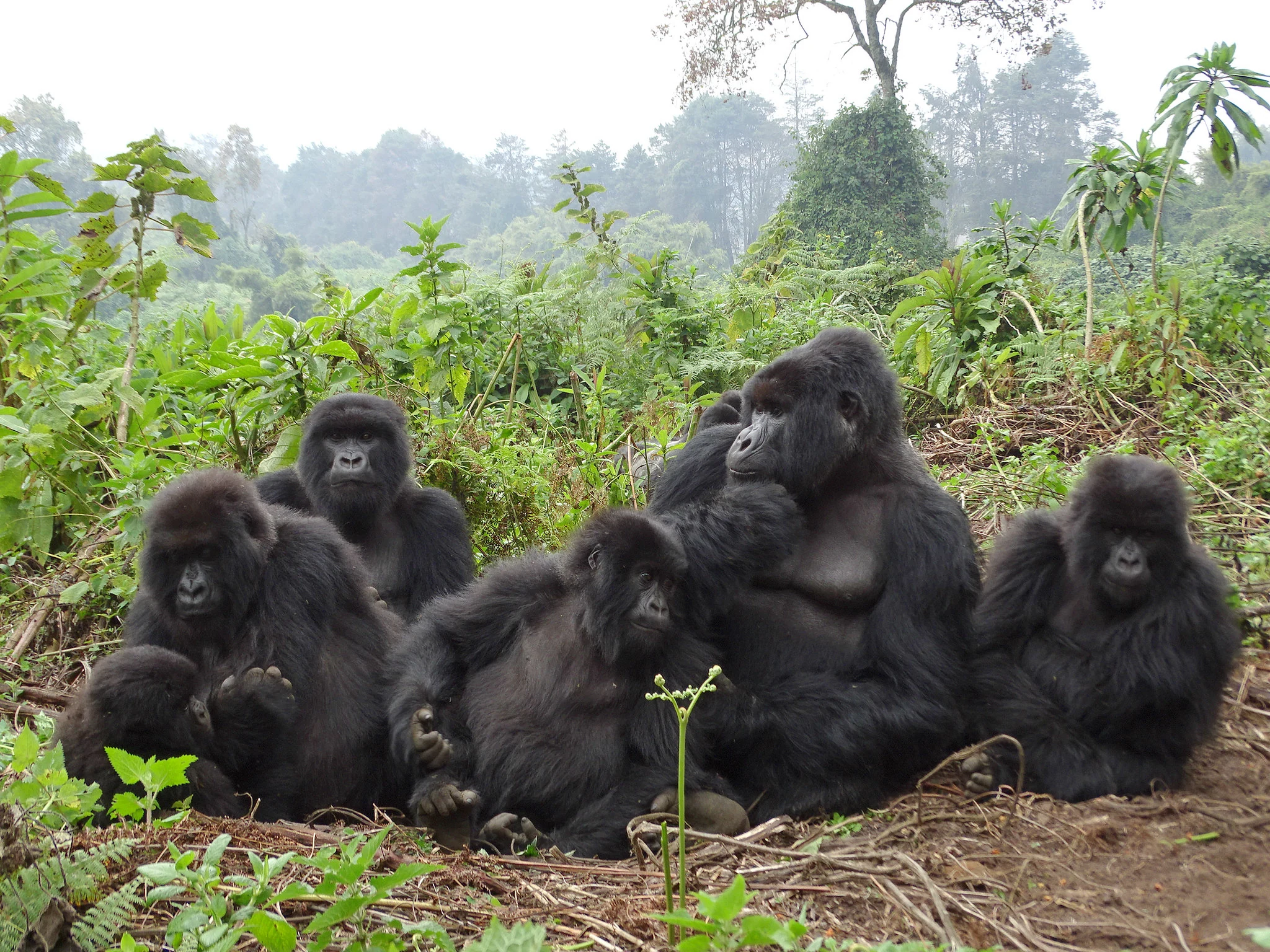
Rwanda gorilla trekking
The easiest mountain gorilla trekking in Africa to reach, at the highest permit price. For travellers on short trips or with mobility concerns, that trade is often the right one.
Where it happens
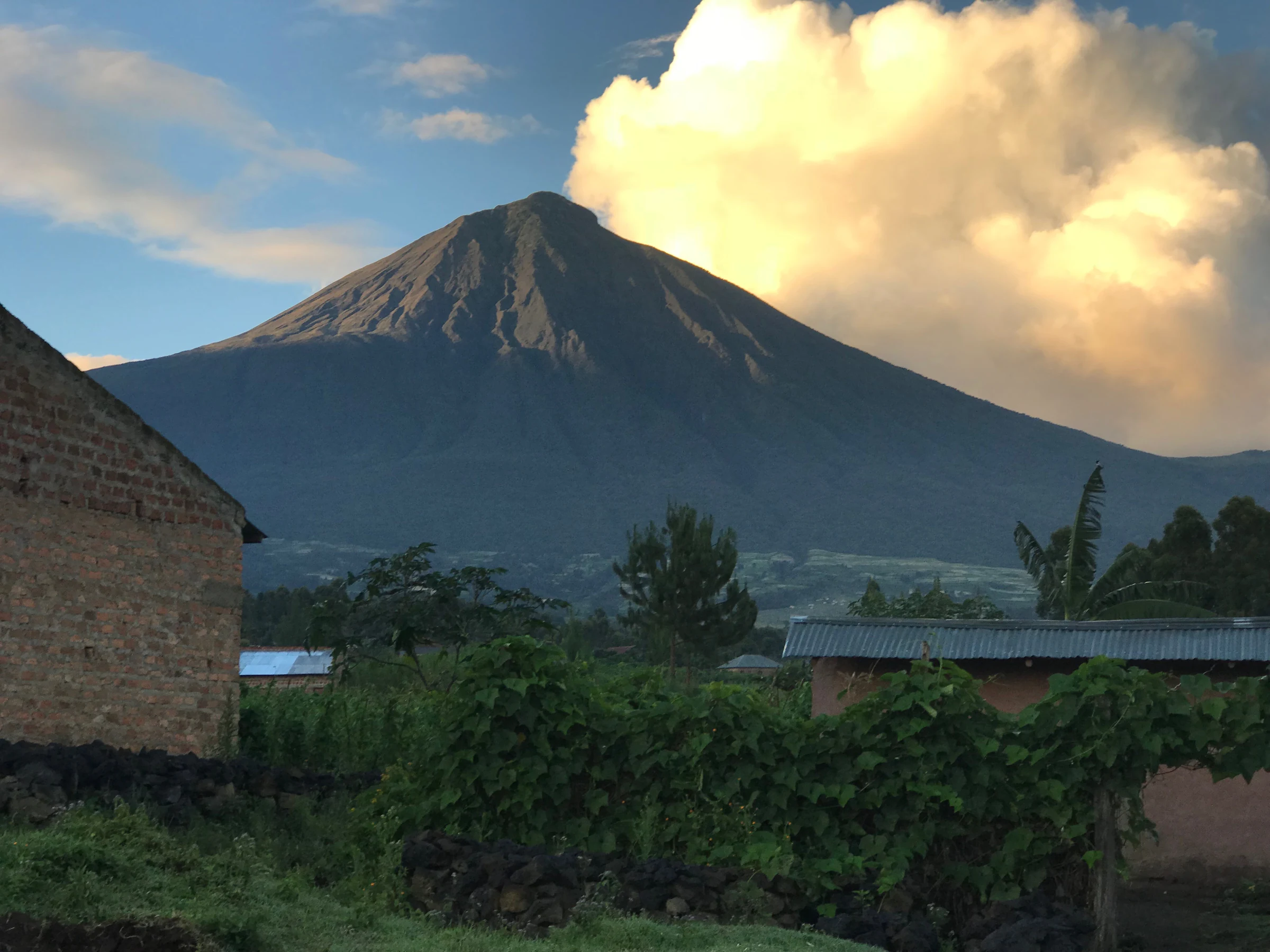
Volcanoes National Park sits on the Rwandan side of the Virunga massif, a chain of volcanoes shared with Uganda and DR Congo. It is the park where Dian Fossey worked, and it has the most established gorilla tourism operation anywhere.
Park headquarters are at Kinigi, near Musanze, roughly two to three hours by road from Kigali International Airport on well-maintained tarmac.
Why travellers choose Rwanda
Access. This is the decisive factor. You can land at Kigali in the afternoon and be at your lodge by evening. No charter flight, no long mountain drive, no second travel day. Nothing in Uganda matches it for simplicity.
Predictability. Treks typically run two to four hours each way over more consistent terrain — bamboo and open volcanic slopes rather than Bwindi's closed rainforest. You have a much better idea what you are committing to.
Photography. More ambient light and cleaner backgrounds than Bwindi's dark canopy.
Mobility. Some sectors offer notably shorter and more manageable treks. If knees or altitude are a real concern, this matters more than any other factor on this page.
Permits
A Rwanda gorilla permit costs USD 1,500 per person for foreign non-residents, year-round. There is no low-season discount equivalent to Uganda's.
The price is deliberate policy rather than a supply problem — Rwanda has pursued a high-value, low-volume tourism model, and the permit revenue funds conservation and community programmes around the park.
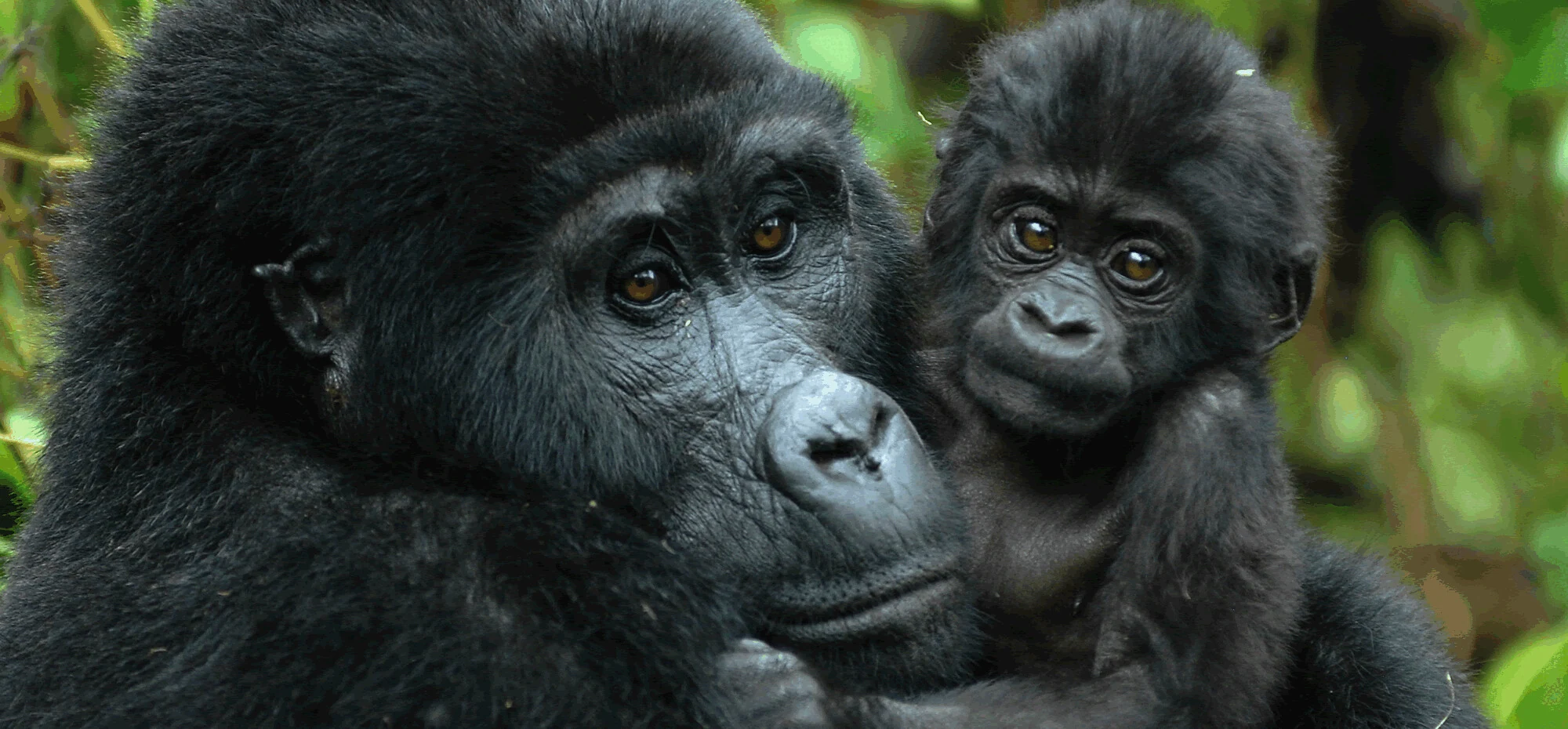
The same core rules apply as in Uganda: eight visitors per family per day, one hour with the gorillas, seven-metre distance, minimum age fifteen.
The honest comparison
Uganda's permit is USD 800, or USD 600 in April, May and November. Rwanda's is USD 1,500. On a couple that is a USD 1,400 to USD 1,800 difference, which is enough to fund the Entebbe to Bwindi charter and more besides. Rwanda buys you simplicity; Uganda buys you budget and wilder forest. Neither is a compromise.
The trek
Briefing at Kinigi at around 07:00, with traditional dancers and coffee while groups are allocated. Trekkers are assigned to families partly on fitness — say so if you have concerns.
From the trailhead you walk up through cultivated fields to the park boundary, then into bamboo. The terrain is steeper than it looks and the altitude is real, but the going is more consistent than Bwindi and there is generally a path.
Porters are available and worth hiring, for the same reasons as in Uganda.
What else is here
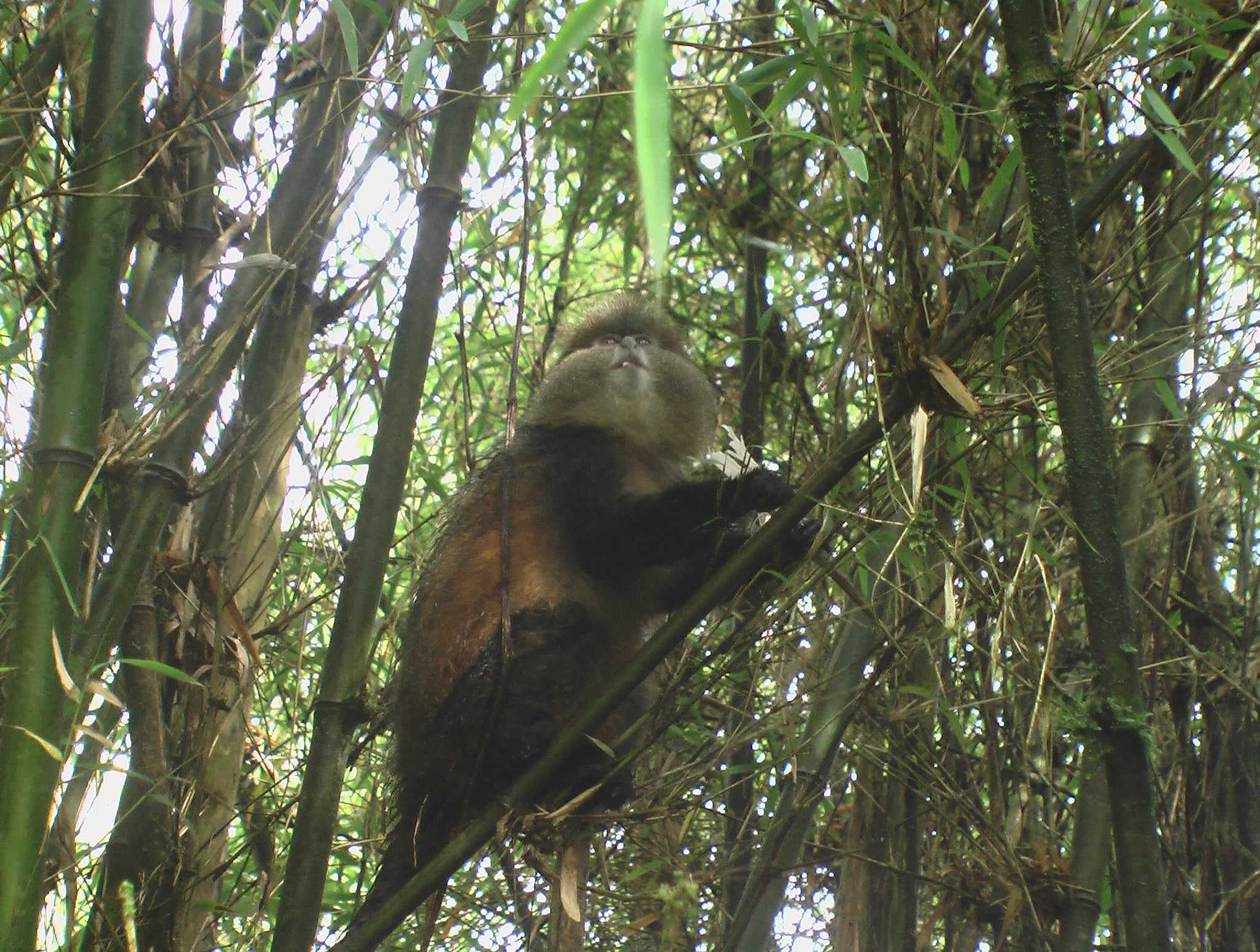
- Golden monkeys — a separate permit, a separate morning, and far less demanding physically.
- The Dian Fossey tomb hike — a substantial walk up to the Karisoke research site where she is buried alongside gorillas she studied.
- Kigali — genuinely worth a day. The Genocide Memorial is essential and sobering; the city itself is unlike anywhere else in the region.
- Nyungwe Forest — chimpanzees and a canopy walk, if you have the days.
Combining with a Kenya safari
Nairobi to Kigali is about an hour and a half by air. The Kenyan eTA remains valid for re-entry after a trip to another East African Community country, so a Mara-then-Rwanda-then-Nairobi routing needs only one Kenyan application.
Common questions
How much is a Rwanda gorilla permit?
USD 1,500 per person for foreign non-residents, year-round. Rwanda does not offer a low-season discount.
How far is Volcanoes National Park from Kigali?
Two to three hours by road on good tarmac. No internal flight is needed, which is Rwanda's main practical advantage over Uganda.
Is Rwanda easier than Uganda for gorilla trekking?
Generally yes. Treks typically run two to four hours each way over more consistent terrain, and the transfer from the airport is far shorter.
Plan your Kenya and gorilla safari
Tell us roughly when you want to travel and how long you have. We will send a written itinerary and a quotation.