
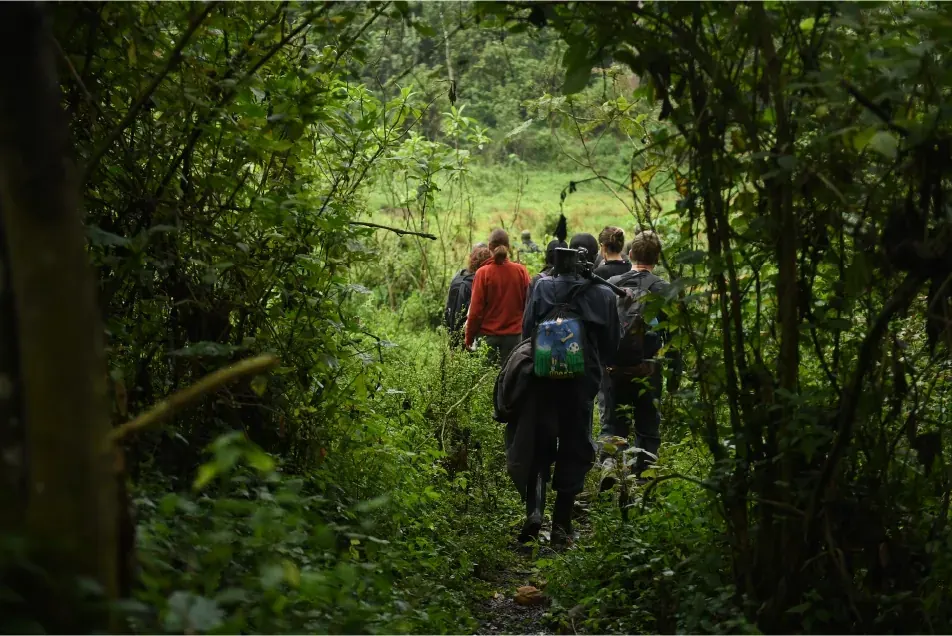
Uganda gorilla permit and trip costs
A permit is $800, or $600 in three specific months. That is the easy part. The rules around booking one changed in 2026, and they change what you can and cannot do when planning dates.
Current permit rates
Permits are issued by the Uganda Wildlife Authority and are valid in Bwindi Impenetrable National Park and Mgahinga Gorilla National Park.
| Visitor category | High season | April, May, November |
|---|---|---|
| Foreign non-resident | USD 800 | USD 600 |
| Foreign resident | USD 700 | USD 500 |
| African, non-EAC | USD 500 | — |
| East African Community citizen | UGX 300,000 | — |
Uganda Wildlife Authority tariff, as at September 2026. Tariffs are reviewed periodically — we confirm the rate applying to your dates in writing with your quotation.
The low-season discount, and its catch
The $600 rate applies in April, May and November. These are Uganda's wetter months, when demand falls and forest paths are harder work. The saving is $200 per person — $400 for a couple, which is not a trivial line in a trip budget.
The catch: discounted low-season permits cannot be rescheduled. A standard permit can sometimes be moved to a different date; a discounted one cannot. If your dates are at all uncertain, the $200 is buying you a rigidity you may not want.
Worth knowing if you are also doing a Kenya safari
April and May are Kenya's long rains, when Masai Mara tracks get difficult. So the discounted months suit a gorilla-led trip rather than a safari-led one. November is the more balanced of the three.
The 2026 booking rule you need to plan around
Uganda used to allow a seven-day reservation hold — an operator could pencil in a permit while you decided. That hold was withdrawn in March 2026. Permits are now paid in full at the moment of booking.
In practice this reorders how the whole trip gets confirmed. Previously you might settle lodges first and lock permits after. Now permits lead: we need your passport details and permit payment before anything else is secured, because the date does not exist for you until the permit is bought.
It also means shopping around between operators costs you availability. While you compare three quotations over a fortnight, the permits you were quoted on may be gone. In peak months they usually are.
What the permit covers
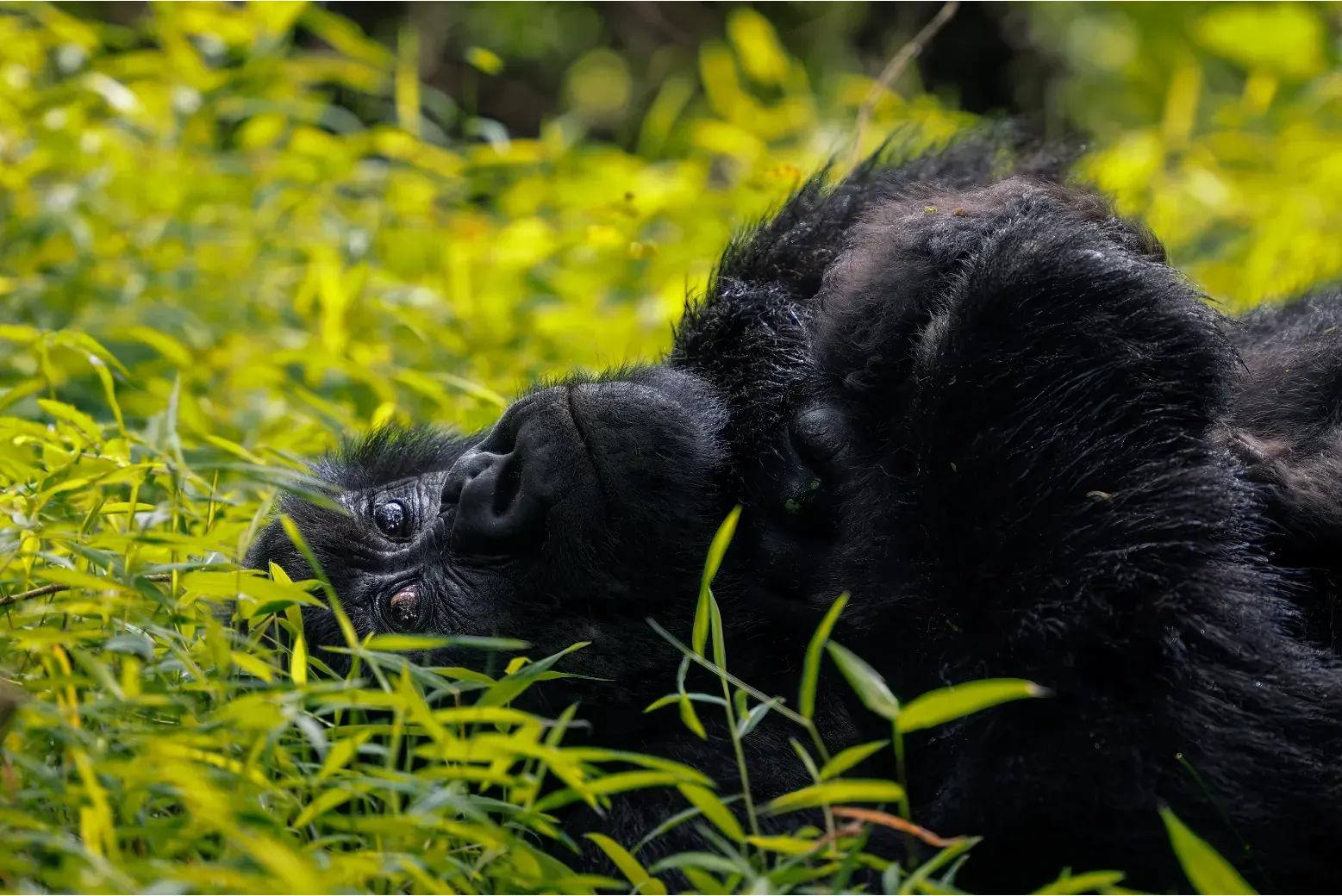
- One hour with a habituated gorilla family
- Park entry for the day of the trek
- Ranger guides and an armed escort
- A gorilla tracking certificate
It does not cover:
- Transport to the park or between sectors
- Accommodation and meals
- Porters — roughly a day rate paid at the trailhead, and worth every shilling
- Tips for rangers, trackers and porters
- Trekking gear, waterproofs or boots
The habituation experience
Uganda offers something Rwanda does not: four hours with a gorilla family still being habituated, alongside the researchers doing the habituating, rather than one hour with a fully habituated group. Group sizes are smaller and the encounter is a different thing entirely — more observation, less spectacle.
It costs more than a standard permit, and the rate is scheduled to rise. Because the timing of that increase is the sort of detail that moves, we quote the habituation rate applying to your specific dates rather than publishing a figure here that may be out of date by the time you read it.
More on the habituation experience
The other costs in a gorilla trip
The permit is the headline, but it is rarely more than a third of what a trip costs. The rest divides into things with fixed prices and things where the range is wide.
Fixed
- Kenya eTA — $30 per person if you are combining with a Kenya safari, infants included.
- Masai Mara reserve entry — $100 per adult per day January to June, $200 July to December.
- Uganda entry — e-visa, or an East Africa Tourist Visa if you are visiting more than one country.
Variable, and where quotes really differ
- Accommodation — the widest single variable. Bwindi has everything from simple community-run guesthouses to lodges on the forest edge at several times the price.
- Getting to Bwindi — a charter from Entebbe to Kihihi or Kisoro is roughly 45 minutes in the air. Road is six to eight hours and much cheaper. This choice alone can move a quotation substantially.
- Vehicle and guide — private 4x4 with a driver-guide throughout, versus shared transfers.
- Trip length — a second trek needs a second permit.
How to compare two quotations properly
Ask for permits, park fees and internal flights shown as separate lines rather than folded into one per-person figure. Those three are fixed costs that no operator can undercut. If one quote is much cheaper, the difference is in accommodation, vehicle sharing or the road transfer — not in a better permit price, because there is no such thing.
Refunds, changes and insurance
Permits are issued to a named person against a named date and are not transferable. A standard permit can sometimes be moved with sufficient notice and a fee; a discounted low-season permit cannot be moved at all.
UWA has stated positions on partial refunds where a warden confirms illness on the day of the trek, and where gorillas are not located after a completed trek — a rare outcome, since trackers find the families most days. Because these terms are periodically revised, we set out the position applying to your booking in writing rather than publishing percentages here. If another site quotes you an exact refund figure, check its date before relying on it.
The practical takeaway: build travel insurance that specifically covers non-refundable elements into the budget from the beginning. On a trip where one line item is $800 per head and non-transferable, this is not optional.
We buy the permits
Foreign visitors book through a licensed Ugandan operator rather than direct with UWA. We are Uganda Tourism Board registered under UTB/RTT/TT/2025/101816, and permit purchase is part of what we do rather than something we outsource.
Uganda against Rwanda on cost alone
Rwanda's permit is $1,500. Uganda's is $800, or $600 in the discounted months. On a couple that is a $1,400 difference at the standard rate, and $1,800 in the low season.
That gap is large enough to fund the Entebbe to Bwindi charter, which is the main practical objection to Uganda. It is also large enough to fund a second trek. Cost is not the only factor — Rwanda genuinely wins on access and predictability — but it is a big one, and it is why most travellers combining with a Kenya safari end up in Bwindi.
Check availability for your dates
Permits go on a first-paid basis and peak dates move fast. Tell us your window and we will come back with what is actually available.