
Kenya safari and gorilla trekking: how to combine them
You want the Masai Mara and you want to stand near a mountain gorilla. Those two things happen in different countries. Here is how the trip actually fits together, what each leg takes, and where the real trade-offs sit.
The short answer
Kenya has no mountain gorillas. The species survives only in Uganda, Rwanda and DR Congo, in a narrow band of montane forest. So a combined trip means two countries: Kenya for the savannah, then a border crossing for the forest.
The routing is well established and neither leg is difficult. Nairobi is the hinge. From there it is roughly an hour and twenty minutes in the air to Entebbe for Uganda, or about an hour and a half to Kigali for Rwanda. Both are ordinary scheduled flights, not expeditions.
Most travellers we book do the Kenya leg first and finish with the gorillas. There is no rule about it, and flight routing sometimes argues the other way, but arriving fresh into Nairobi and easing into game drives before the harder physical day works well for most people.
How many days you actually need
Ten days is the realistic minimum for both halves without a rushed feel. Twelve is more comfortable and buys you a margin for weather and missed connections.
A ten-day shape, with Uganda as the gorilla destination:
Arrive NairobiOne night in the city. International arrivals mostly land late, so the first day is a travel day whatever you do with it.
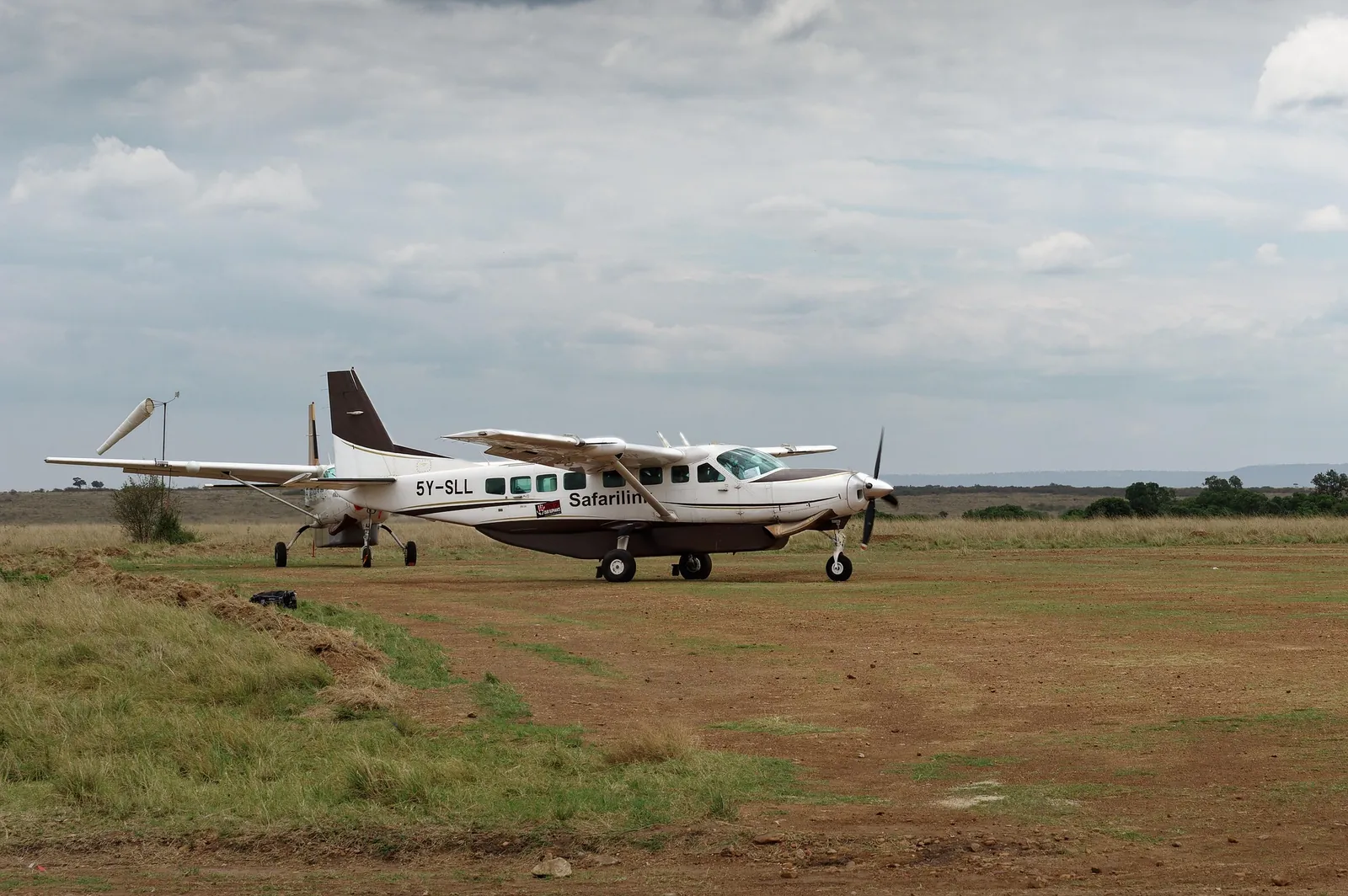
Transfer to the Masai MaraLight aircraft from Wilson Airport, or a road transfer if you would rather see the Rift Valley on the way down.
Masai MaraFull days of game drives. Three nights here is the point below which the Mara stops being worth the transfer.
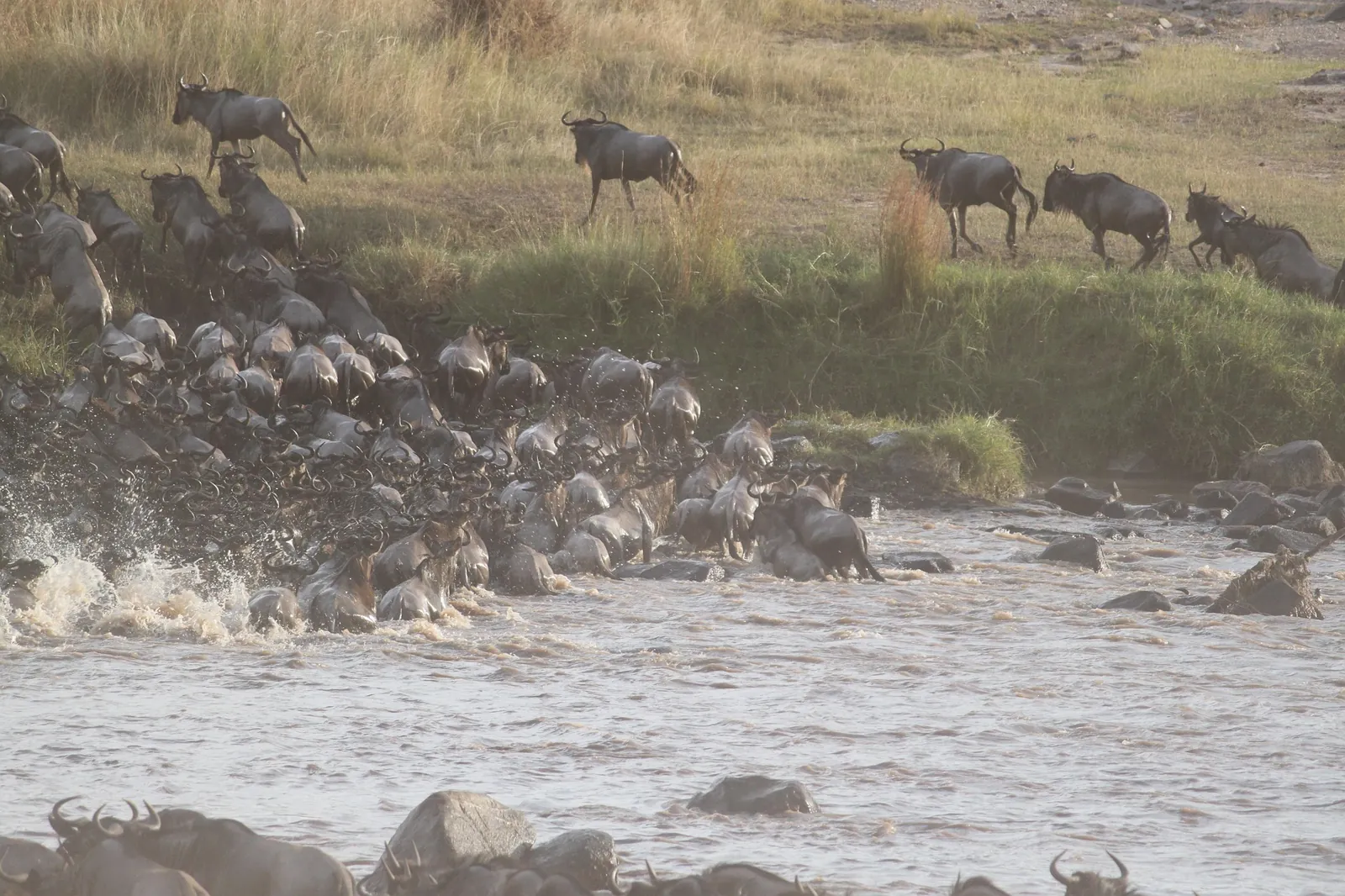
Masai MaraIn season, the river crossings. Otherwise big cats, and the conservancies for walking and night drives.
Masai Mara to NairobiFly back, overnight near the airport.
Nairobi to Entebbe, then to BwindiMorning flight to Entebbe, then a charter to Kihihi or Kisoro airstrip. Arrive at the lodge in the afternoon with the evening free.
Gorilla trekkingBriefing at the park headquarters at dawn. Trek, one hour with the family, back by mid-afternoon.
BwindiA second trek, or the Batwa community walk, or simply a recovery day. Do not fly out on the afternoon of your trek if you can avoid it.
Return to EntebbeCharter back, connect through Nairobi or fly out of Entebbe directly.
Departure
Adding two days — one more in the Mara, one more at Bwindi — turns a tight itinerary into a relaxed one. It is the single best use of extra budget on this trip.
See this as a booked itinerary
Our 10-day route covers the same ground with two Kenyan parks and a Ugandan savannah park before the trek.
Uganda or Rwanda for the gorilla half
This is the decision that shapes everything else, and it deserves a straight answer rather than a sales pitch.
The case for Rwanda
Rwanda is easier. Kigali to the park gate at Kinigi is a two to three hour drive on good road, so the whole gorilla leg can sit inside a compact window. Treks in Volcanoes National Park tend to run two to four hours each way and are more predictable than Bwindi's, the terrain is more open, and photography is generally easier. If you have knee trouble, limited time, or you want the smoothest possible logistics, Rwanda is the better country and we will book it.
The case for Uganda
The permit costs $800 rather than $1,500 — a $700 difference per person, or $1,400 for a couple. Bwindi is denser, steeper, genuinely wild forest, and for a lot of people that is precisely what they came for. Uganda also has more to build around it: chimpanzees in Kibale, the Kazinga Channel in Queen Elizabeth National Park, the Nile at Jinja.
The objection you should know about
Entebbe to Bwindi is six to eight hours by road. That is a real day, and it is the honest reason some operators steer travellers towards Rwanda without saying so.
The answer is to fly it. A charter from Entebbe to Kihihi or Kisoro airstrip is about 45 minutes in the air, which puts Bwindi comfortably inside a single travel day from Nairobi. Almost every Kenya-plus-Uganda itinerary we build uses that flight. For a couple, the permit saving covers a meaningful share of the charter cost, so the comparison is much closer than the road figure suggests.
Full side-by-side comparison of Uganda and Rwanda
When to go
July to September is the strongest combined window. It is Kenya's dry season and the peak of the Great Migration river crossings in the Mara, and it is drier in the forest, which makes the trekking paths more manageable. It is also the busiest and most expensive time, and Bwindi permits for those dates sell out months ahead.
Late December to February is the second dry window and works well for both legs, with slightly less pressure on availability.
April and May are Kenya's long rains and the Mara tracks get difficult. They are also — and this is the interesting part — two of the three months when Uganda discounts gorilla permits to $600. If the gorillas are the priority and the safari is the supporting act, the wet-season trip is worth a serious look. If the Mara is the priority, avoid these months.
Gorilla trekking runs year-round
Permits are issued in every season and the encounter itself is rarely compromised by rain. What changes is the walking underfoot, not whether you see gorillas.
What to budget for
The fixed, non-negotiable costs are the ones worth understanding before you compare quotations:
- Gorilla permit — $800 per person in Uganda in high season, $600 in April, May and November, or $1,500 in Rwanda.
- Masai Mara reserve entry — $100 per adult per day from January to June, $200 from July to December. Children aged 9 to 17 pay $50 year-round.
- Kenya eTA — $30 per person, including infants.
- Regional flights and charters — Nairobi to Entebbe, and the Entebbe to Bwindi charter if you take it.
Accommodation is where the range opens up, from modest lodges to the high-end camps, and it is the main thing separating two quotes for what looks like the same trip. Ask any operator to show park fees and permits as separate lines rather than folded into a single figure.
Uganda permit and trip costs in full
Visas and entry
Kenya replaced its visa system with an Electronic Travel Authorisation in January 2024. You apply at etakenya.go.ke, pay $30, and should do it at least three days before travel. Every visitor needs one, infants included.
The detail that matters for this trip: the Kenyan eTA stays valid for re-entry after a temporary visit to another East African Community country. So Nairobi, then Uganda, then back through Nairobi does not require a second application.
Uganda and Rwanda both run e-visa systems. An East Africa Tourist Visa covering all three countries on one multiple-entry document also exists and is usually the most economical route for a combined trip. Requirements shift, so we confirm the current position for your nationality in writing with your quotation rather than leaving you to work it out.
Booking order
Permits first, always. Since March 2026 Uganda's seven-day reservation hold has been withdrawn, which means permits are paid in full at the moment of booking — there is no longer a way to pencil in a date while you think about lodges. In practice we need your passport details and permit payment before anything else is confirmed, then accommodation and flights follow.
Permits are tied to a named person and are not transferable. Build travel insurance that covers non-refundable elements into your budget from the start.
Tell us roughly what you have in mind
Dates, rough length, and whether the gorillas or the savannah is the priority. We will send a written itinerary and say plainly if Rwanda would suit you better.