
Amboseli safari
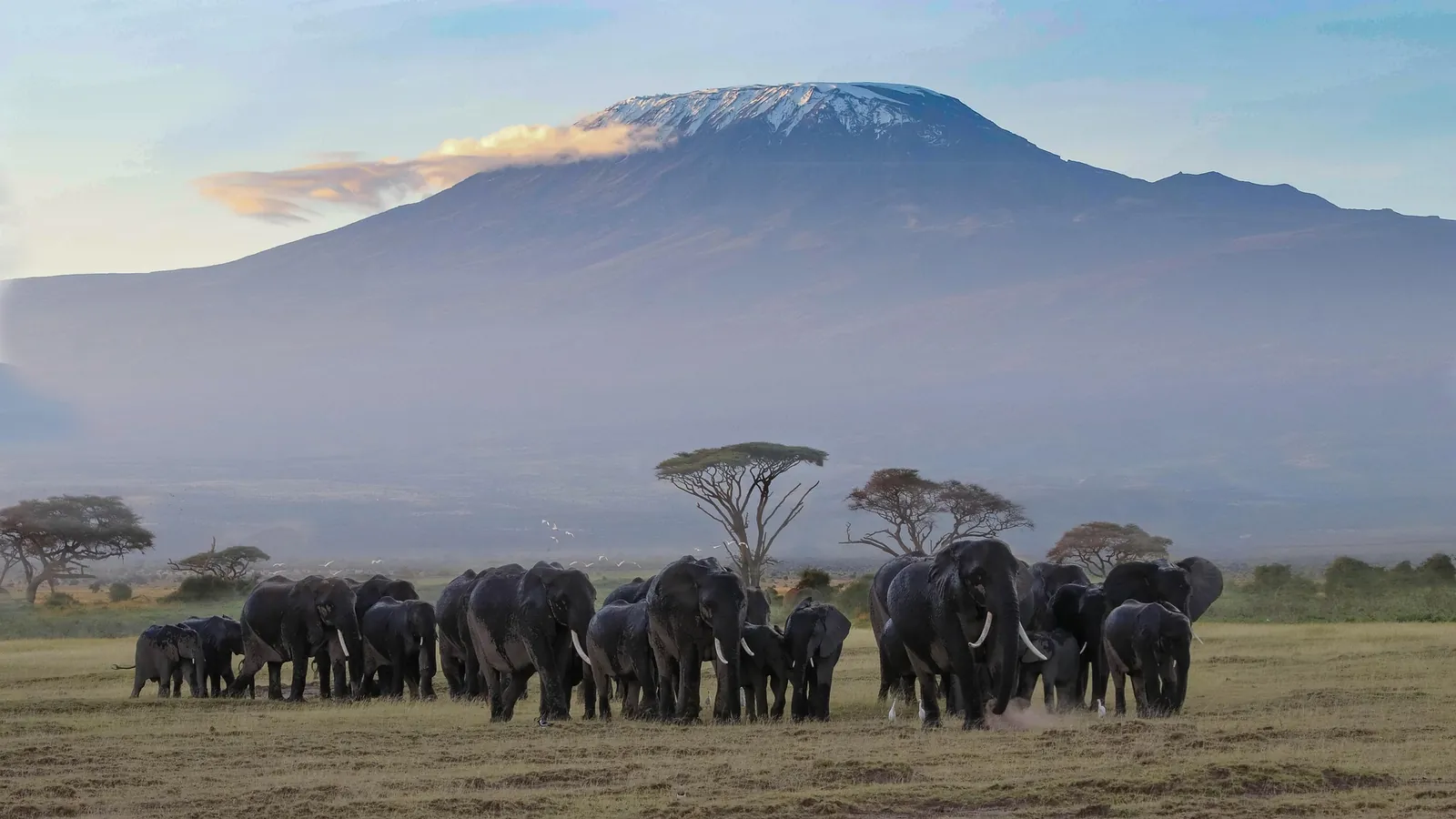
Kenya's elephant park, and the one place where the classic photograph of a herd beneath Kilimanjaro is actually possible.
What Amboseli is for
Amboseli sits in southern Kenya against the Tanzanian border, directly beneath Kilimanjaro. It is a Kenya Wildlife Service park, considerably smaller than the Mara, and its reputation rests on two things.
Elephants. Amboseli's herds are among the most studied in the world and include some of the largest-tusked individuals left in Kenya. The open, low vegetation means you see them clearly rather than glimpsing them.
Kilimanjaro. The mountain is in Tanzania but the view is from Kenya. It clouds over through most of the day, so the window is early morning and late afternoon — plan game drives accordingly rather than hoping.
How it complements the Mara
Amboseli is not a substitute for the Masai Mara and does not try to be. Predator density is lower and there are no river crossings. What it adds is a completely different landscape — dry lake bed, swamps fed by Kilimanjaro's meltwater, and open plains under a mountain — and photography that the Mara cannot match.
Two nights is usually right. The park is small enough to cover properly in that time.
Getting there
From Nairobi: roughly four hours by road, or a short light-aircraft hop from Wilson Airport. Amboseli also connects reasonably to Tsavo West if you are building a longer Kenyan circuit.
On a combined Kenya and gorilla itinerary, Amboseli usually goes first — before the Mara — because it sits south of Nairobi while the Mara and the onward flight to Entebbe both pull you west and north.
Park fees
Amboseli is managed by the Kenya Wildlife Service, and entry is paid through the KWS eCitizen system rather than the Narok County portal used for the Masai Mara. The two are not interchangeable.
We are not publishing a fee figure on this page until it has been checked directly against the current KWS tariff. Your quotation carries the rate applying to your dates, itemised separately rather than folded into a per-person total.
When to go
The dry seasons — June to October, and January to February — concentrate wildlife around the swamps and give the clearest mountain views. Dust is the trade-off, and Amboseli gets genuinely dusty late in a dry season.
The green seasons bring better light, fewer vehicles and lower rates, at the cost of more cloud around Kilimanjaro.
Plan your Kenya and gorilla safari
Tell us roughly when you want to travel and how long you have. We will send a written itinerary and a quotation.